Neomedieval Cycle
This cycle of work makes use of the Medievalist subdiscipline of Neomedievalism, a deliberate and self-aware use of an invented Middle Ages. Specifically, it fully embraces the fiction that the Middle Ages were a mysterious and alien place that the modern mind would find uncomfortable to exist in. These pieces use medieval visual and architectural formats while working in Umberto Eco’s formulation of the neomedieval in “Dreaming of the Middle Ages” (1986). Just as manuscripts, altarpieces, and cathedrals constructed a medieval worldview, I use simulations, projections, and screen enclosures to surface the contemporary worldview.
TechnoShrine
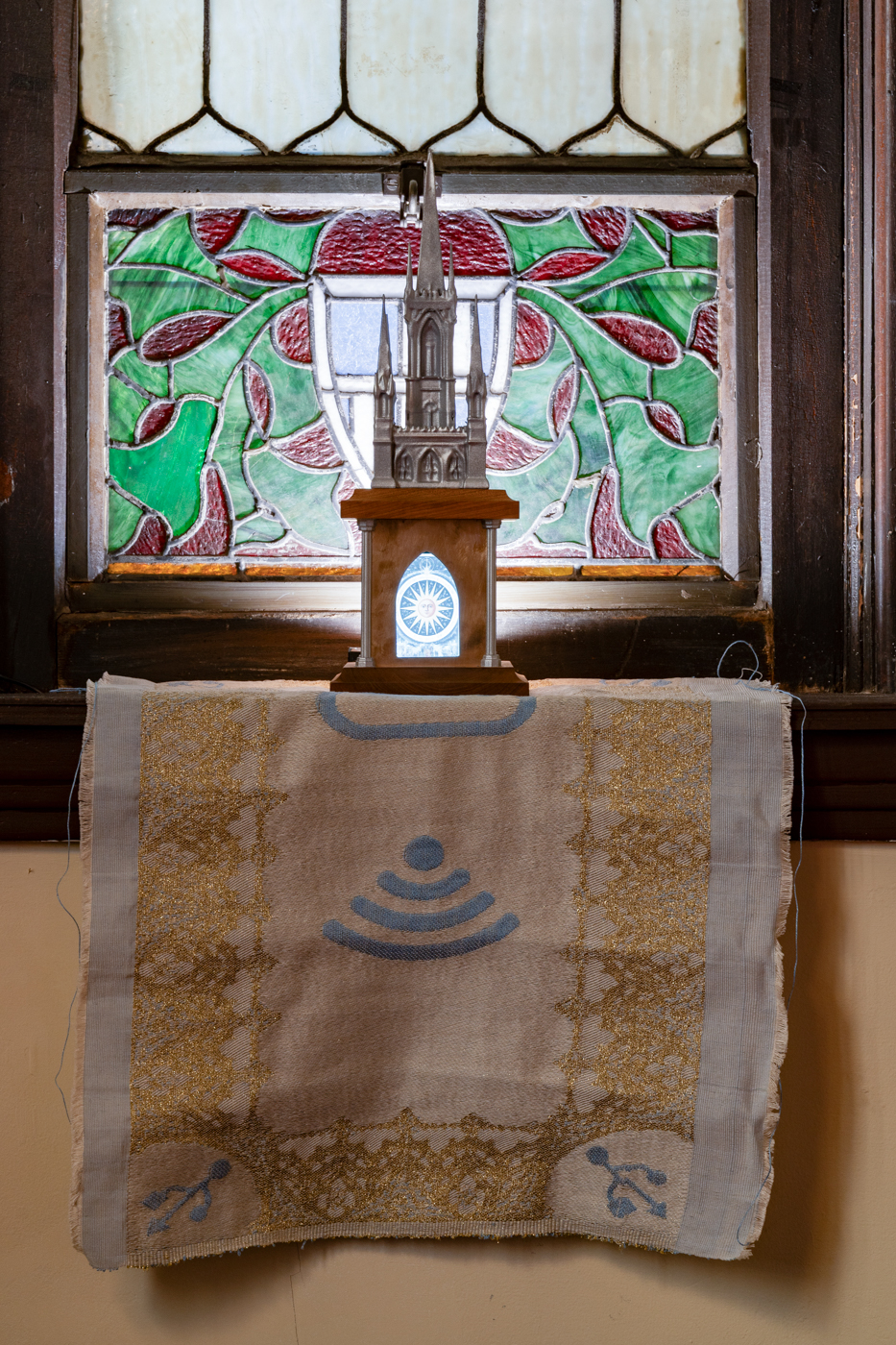
TechnoShrine, 2025
3D-printed PLA, CNC-milled cherry wood, single-channel video (image), microcomputer, display
6.5x6.5x19 inches
TechnoShrine manifests the virtual devotion that many engage in when using their smartphones. Exhibited as part of Electric Psalms (2025) with Erber Grene (2025), it encloses a Raspberry Pi in a 6½-by-6½-by-19 inch sculpture. Formally derived from devotional architecture and sculptural elements like monstrances, ciboria, and reliquaries, this 3D-printed and CNC-milled enclosure holds a video display playing an endless loop of digital content. I position a hybrid analog-digital video within the same material (wood, metal) and formal (columns, spires) logic as objects with religious function. The synthesis of CGI fed through the Sandin Image Processor speaks to the breadth of time inhabited by this object. This literalizes the surfacing of religiosity within technological industries, also apparent in the job title of Vint Cerf, Google’s Chief Internet Evangelist.
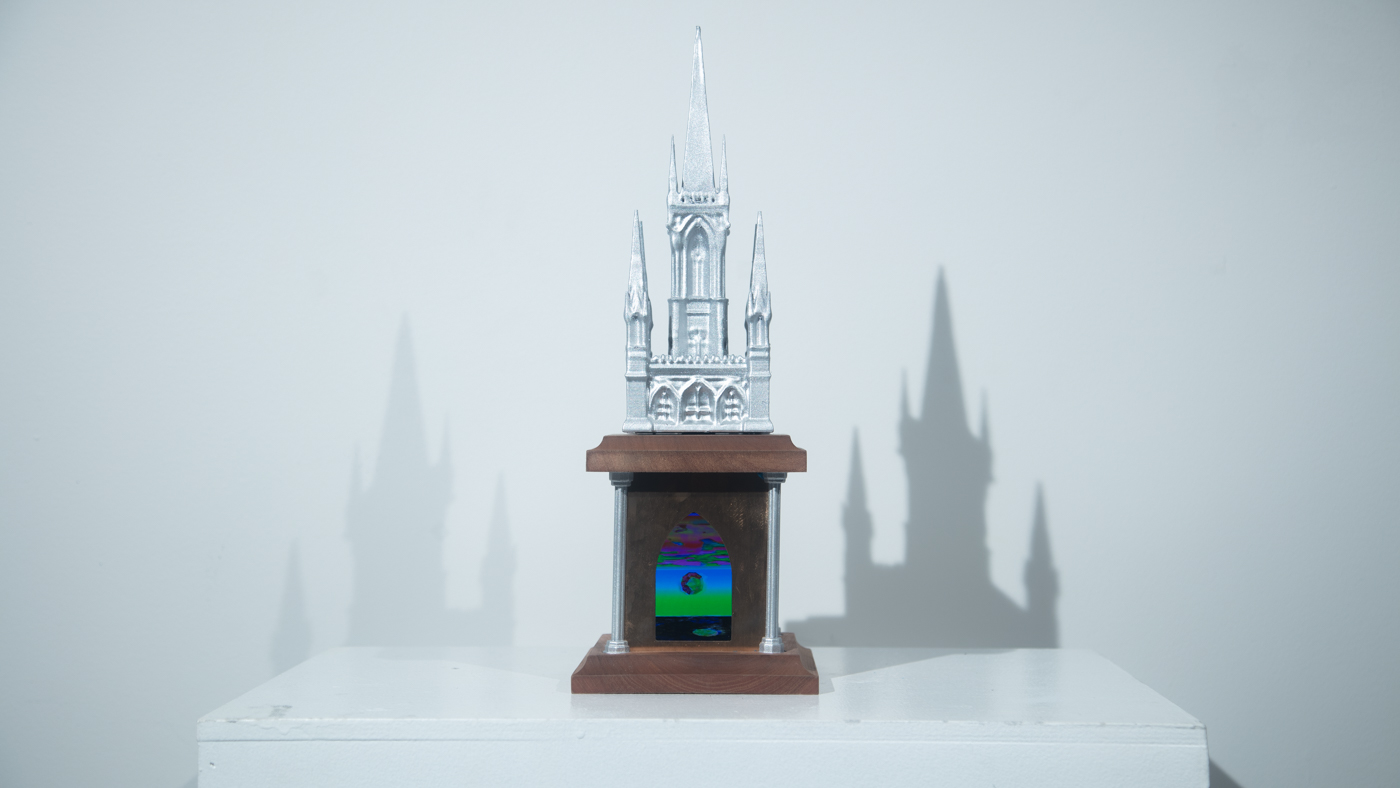
The Sign of the Hand
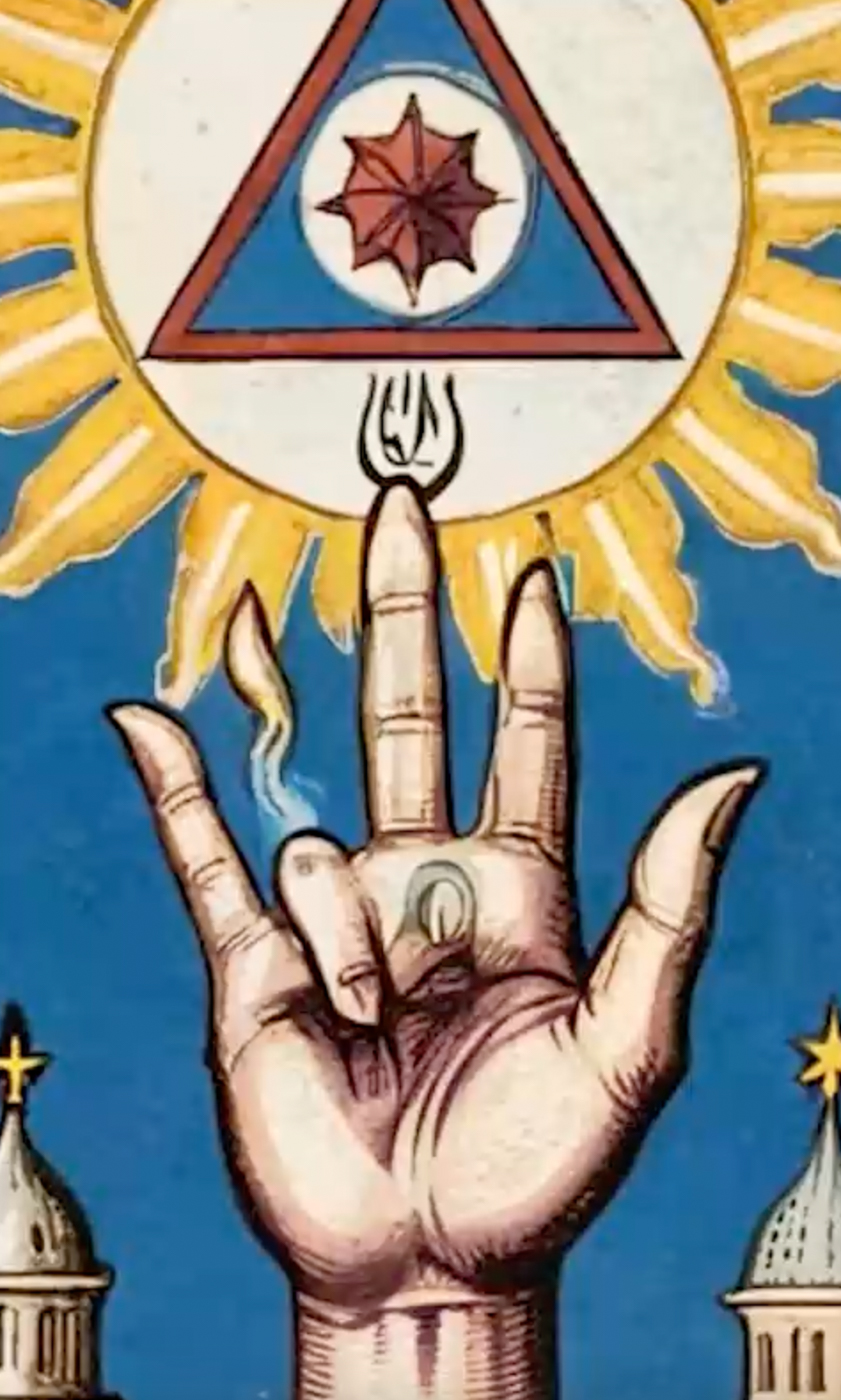
The Sign of the Hand, 2025
Single-channel video (image), AI-generated frames
3min loop
This video began as source material for TechnoShrine, and has since been exhibited as a standalone piece as part of The Wrong Biennale (2025). The frames were generated with a local AI image generation model. The hand, as a signifier, has a long history as a universal sign of humanity, as in the hand silhouettes in Cueva de las Manos (7,300 BCE-700 CE), and as a method of drawing attention, as in the manicule used by printers from the early modern period onward. This piece reveals the notorious inability of AI image generators to enact the artist’s hand.
Erber Grene
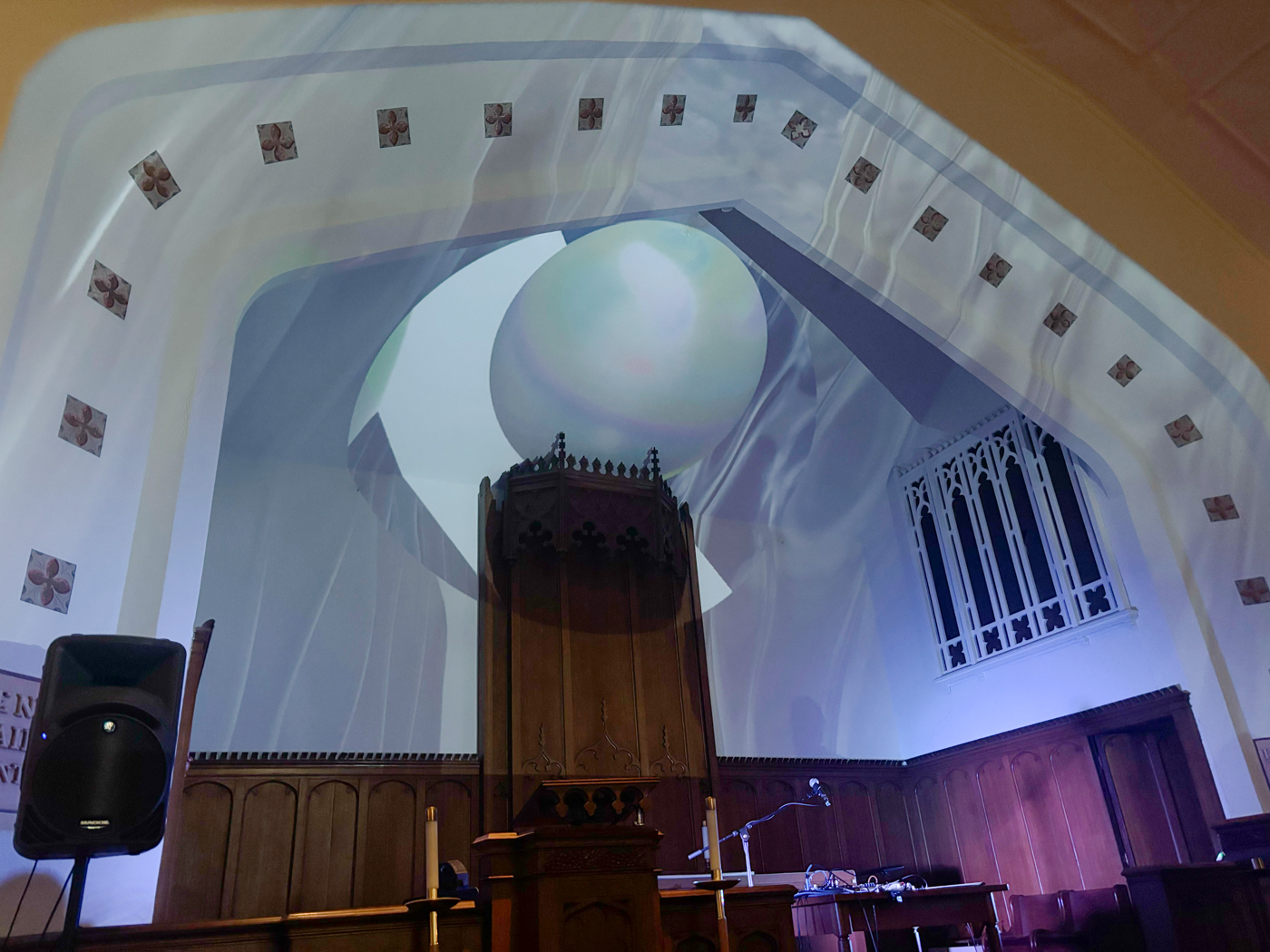
Erber Grene, 2025
Site-specific projection mapping, single-channel animation (image)
Dimensions variable
Installed at Saint Luke’s Lutheran Church of Logan Square, Chicago
Erber Grene is a site-specific projection mapping of a slow, looping animation of a pearl onto a historic church sanctuary. I developed this piece while researching premodern literature, specifically the Pearl poem (late 1300s), a Middle English dream vision allegory about a father and his deceased daughter. Within the allegory, a pearl becomes emblematic of the lost child and her father’s grief in a religious worldview. Against this theologically and emotionally charged imagery, projection mapping on the sanctuary of Saint Luke’s Lutheran Church of Logan Square reactivates the premodern immersive media environment, that is, the religious space.
Scrolling in the Walled Garden
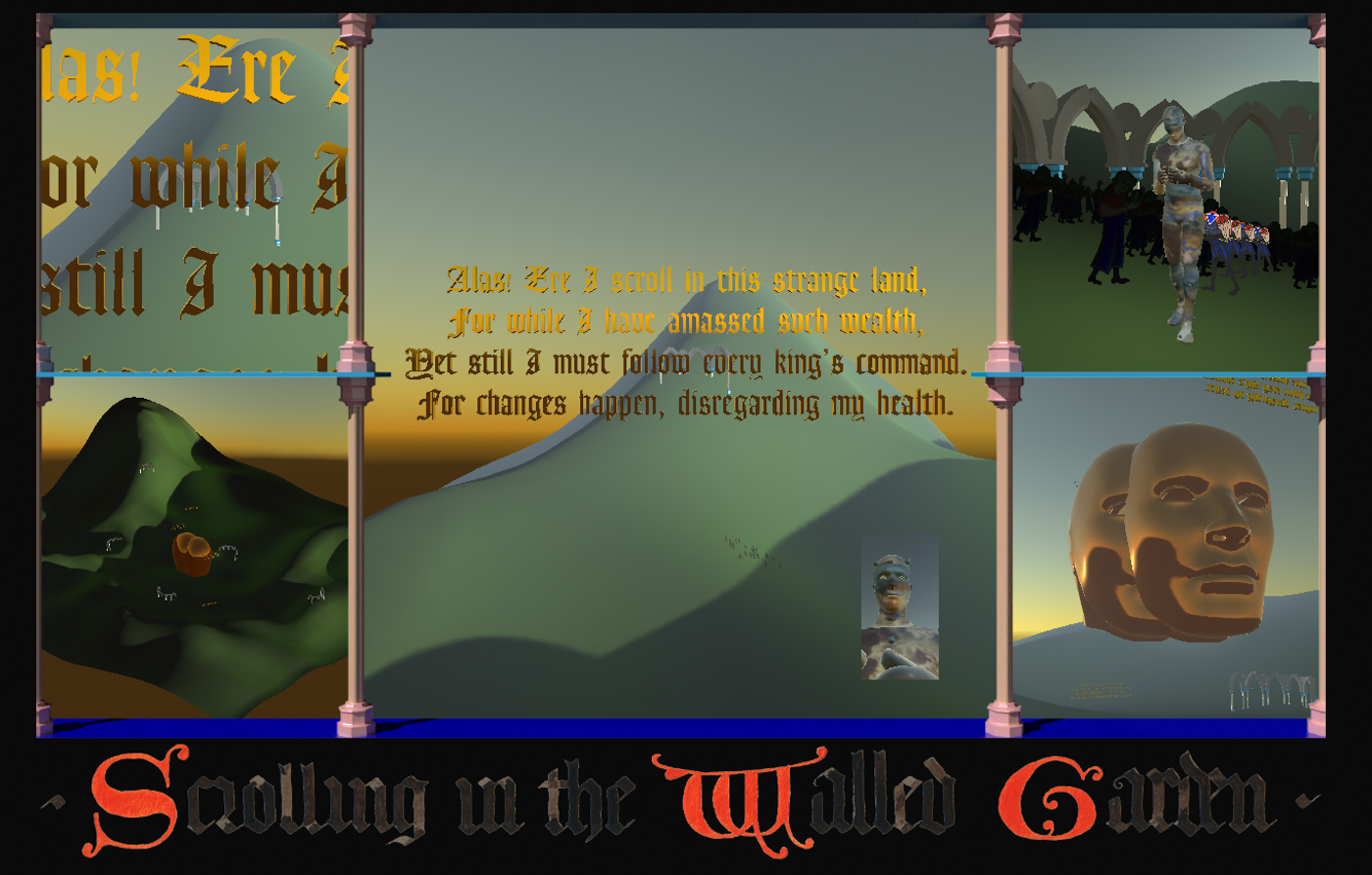
Scrolling in the Walled Garden, 2023
Real-time simulation (Unity), web browser
Dimensions variable
Two-dimensional assets in collaboration with Ksenia Cherniavska
Scrolling in the Walled Garden is a Unity-based simulation where a motion-capture suited avatar absorbed in their smartphone walks endlessly between flat figures vending vegetables and congregating around colonnades. Eventually the avatar is haunted by mysterious specters, inspired by manuscript illuminations, while poetic stanzas rotate around the scroller. The polyptych composition mirrors late medieval altarpieces and the multitasking interfaces of contemporary digital life. By blending medieval manuscript and altarpiece imagery with digital overstimulation, the work literalizes the attention economy as a neofeudal landscape full of crowds and watchers. Two-dimensional assets for this piece were developed in collaboration with calligrapher and manuscript painter Ksenia Cherniavska. It is accessible online.