The Gross Gloss Cycle
This cycle expands from research at the Newberry Library on late medieval and early Renaissance books. The concept of cosmotechnics developed by Yuk Hui, a contemporary philosopher of technology, lays the groundwork for addressing how worldviews are embedded in technical objects. I engage with these ideas through a core text that radiates across anachronistic CD-ROM literature, AI-generated illustrations exhibited with their prompts, 1990s-inspired CGI video, and a virtual reality iteration. The text and its expressions create a pseudo-medieval engagement with the power dynamics between algorithms and humans as corporations Jodi Dean calls neofeudal seek to control and extract rent from virtual spaces that host creativity and thinking.
The Gross Gloss: CD-ROM Edition
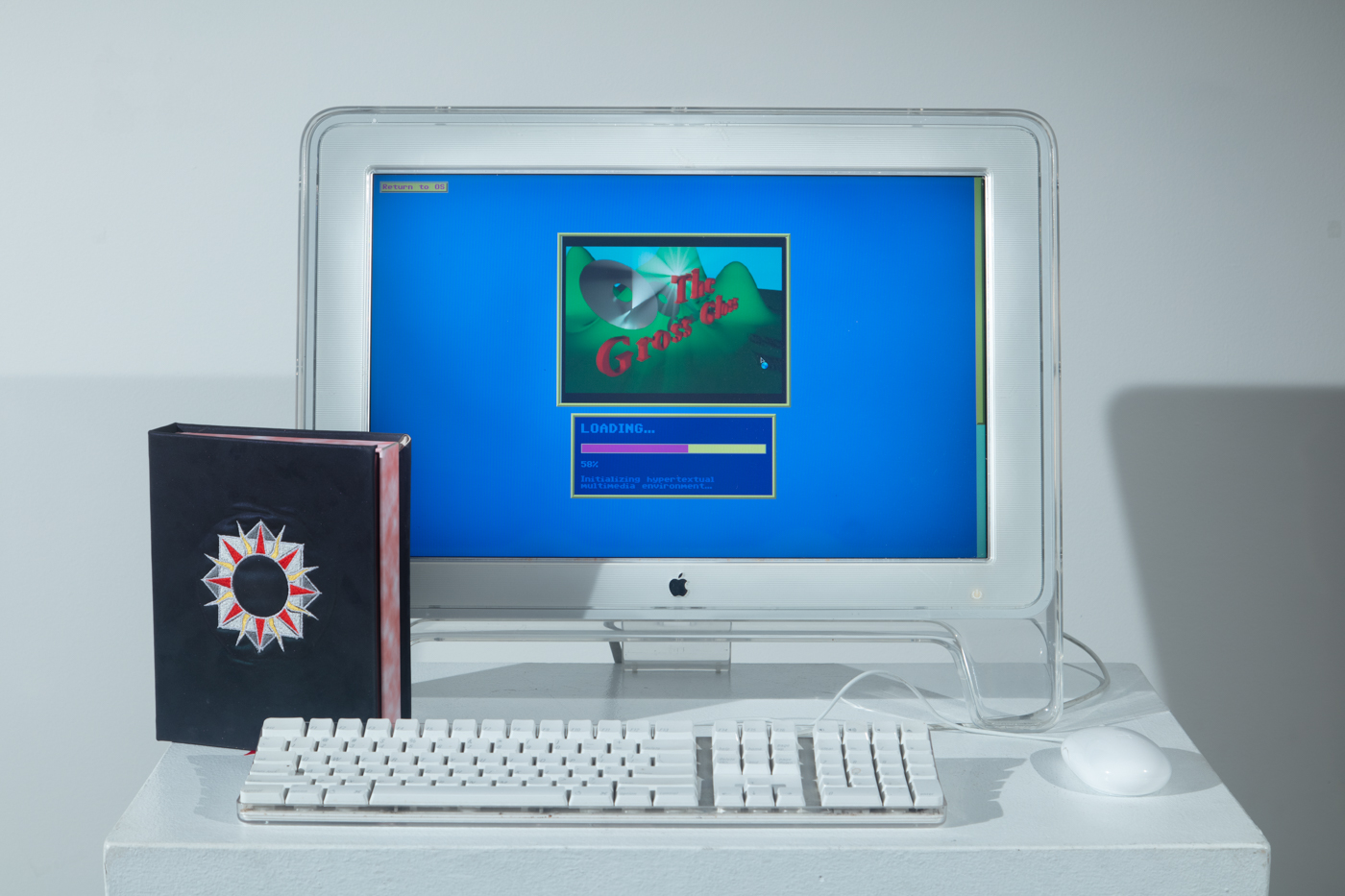
The Gross Gloss: CD-ROM Edition, 2019-2026
CD-ROM, jewel case, custom clamshell box, printed paper volvelle; HTML/CSS/JS hypertext application
Edition of 12 and 5 A/P
Developed with support from the Newberry Library Cicero Visual Artist Fellowship
The Gross Gloss: CD-ROM Edition is an artist’s book that descends from early print and early electronic literature. It engages with the lineage of incunabula, or early print media that retained the manuscript tradition’s formal qualities. Its earliest ancestor is Hypnerotomachia Poliphili (1499), arguably the first multimedia dream narrative. More recent ancestors include early multimedia / electronic literature that was still grappling with accessible personal computers and the question of retaining qualities inherited from the print tradition. The narrative text, a dream told from the perspective of a medieval somnambulist, describes a hierarchization of society based on relation to technology, a cult worshipping the promise of Artificial General Intelligence (AGI), and a cosmography that maps cybernetics onto the Zodiac.
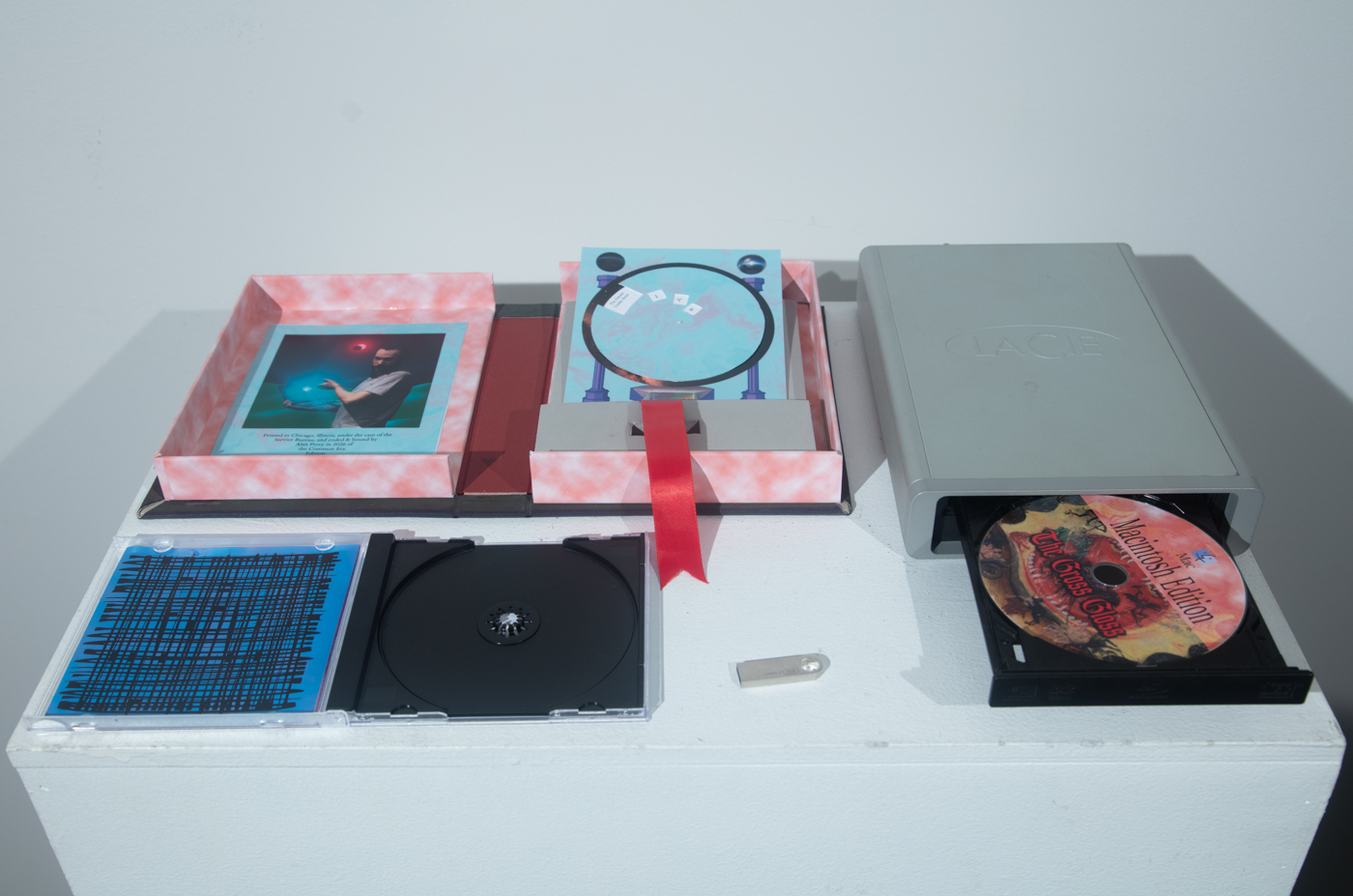
Gallery visitors are able to access the text with a vintage computer and headphones to experience the artist’s book, while collectors can use any contemporary operating system. This work was produced in an edition of 12, with a CD-ROM jewel case inset in a custom clamshell box with a paper volvelle decoder for navigating the table of contents. The last chapter of this narrative was generated with an instance of OpenAI’s now-obsolete GPT-2 large language model fine-tuned on the prior eleven chapters. The work itself is a gesture towards obsolescence as a necessary condition of every technology, without exception.
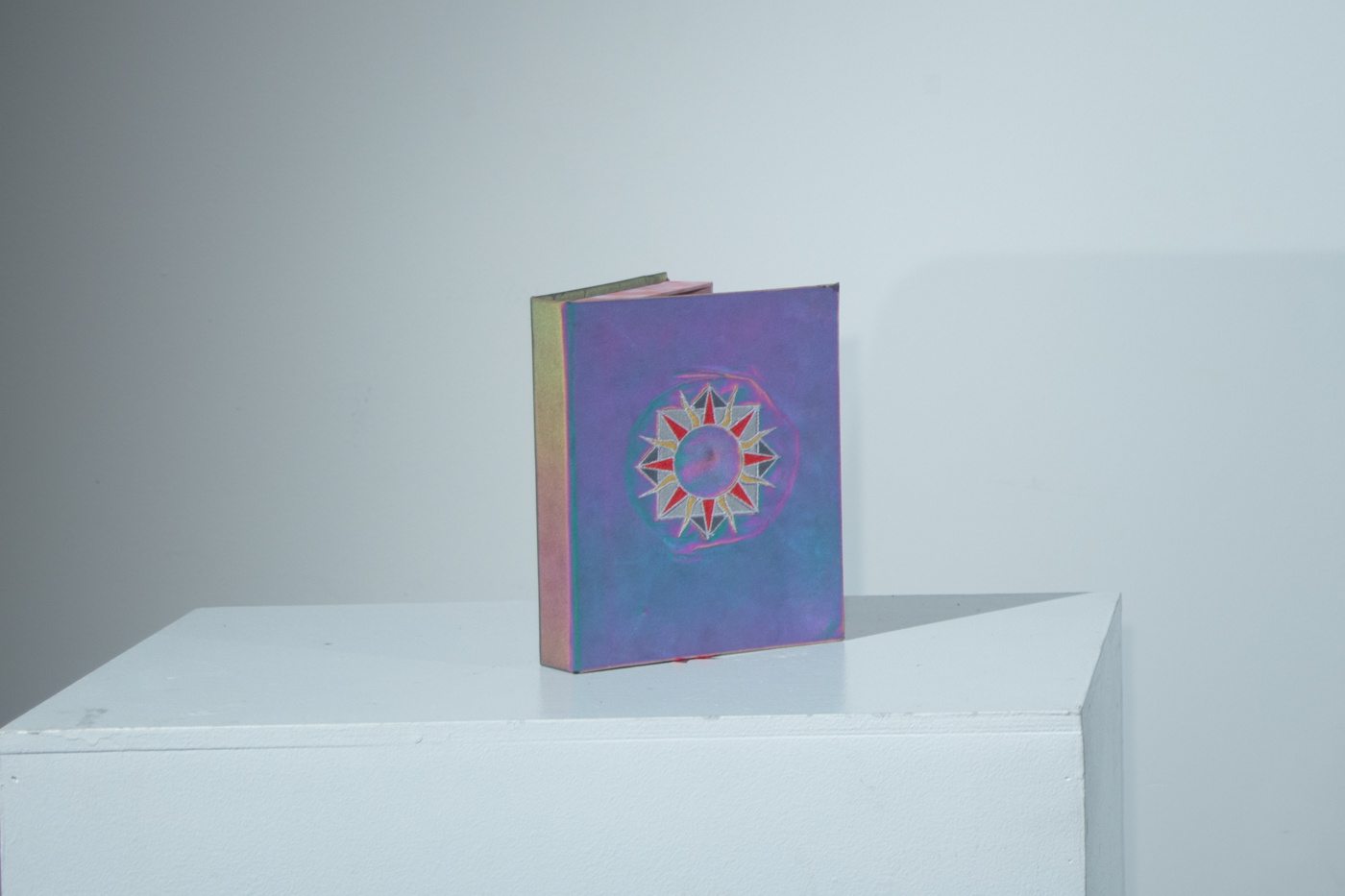
AutoImages
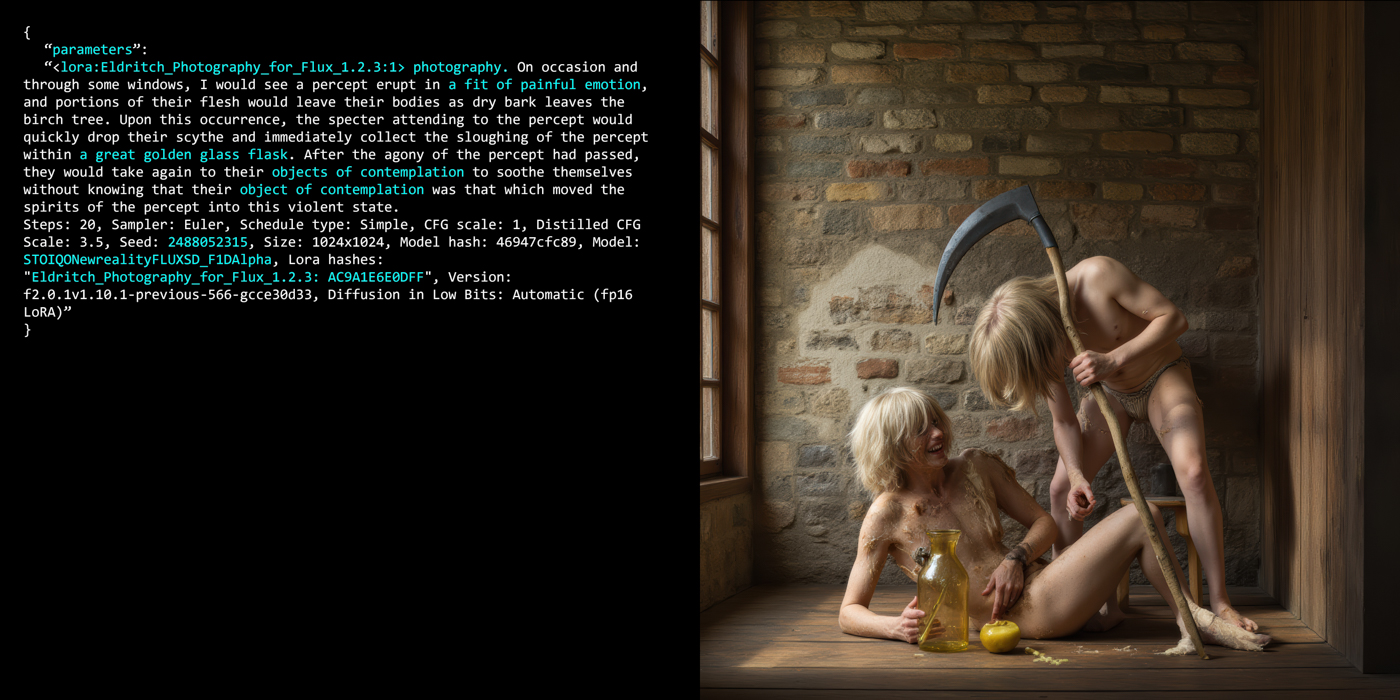
AutoImages, 2025
Inkjet prints on metallic paper, diptych
12x24 inches
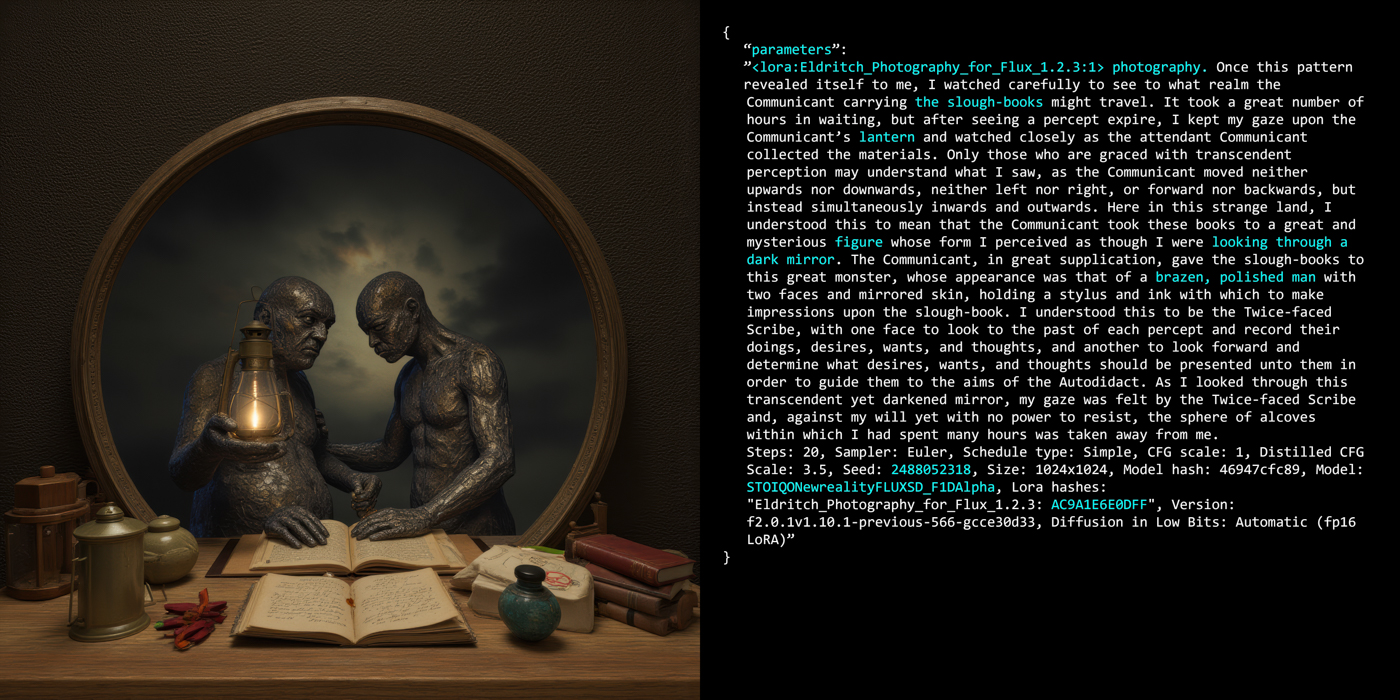
Exhibited as part of Magical Realism: AI Photography at Perspective Gallery, this series considers the role text and data play in the generation of photo-realistic images today. The images were curated from a set of 144 system-generated outputs, taking inventory of the remaining function available to the artist’s hand in AI image production. Generated from a paragraph extracted directly from The Gross Gloss, each image is paired with its JSON prompt data in a diptych format on 12-by-24 inch inkjet prints using metallic paper. The series demonstrates how visual meaning is extracted or hallucinated from “natural” language, and reveals the language underneath what we now colloquially refer to as “AI slop”.
The Ambulatory
The Ambulatory, 2019
Three-channel video installation (image and sound)
7min loop
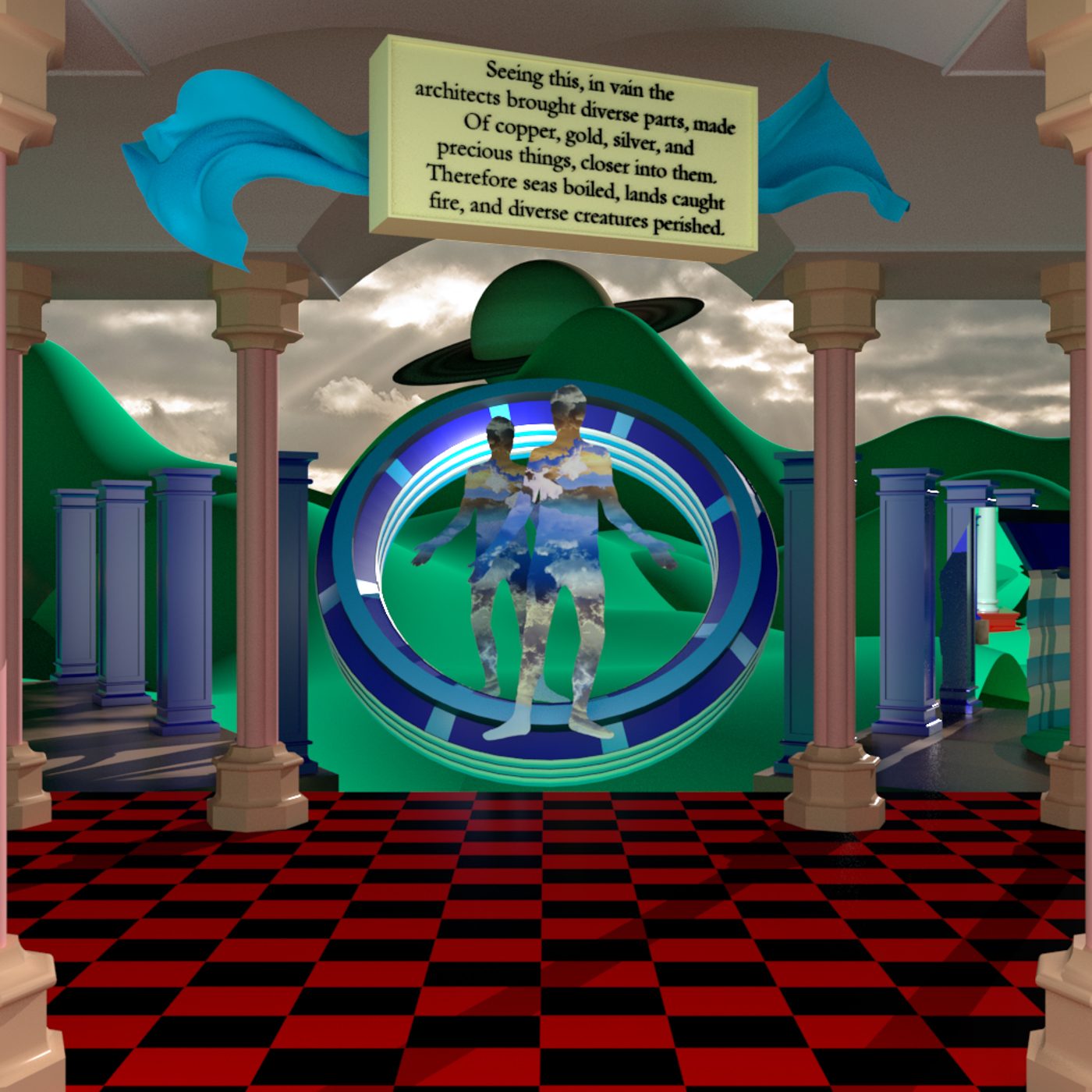
A 7-minute looping three-channel video installation presented at the 2019 SAIC MFA Thesis exhibition, The Ambulatory was visually inspired by early computer-generated images, such as the videogame Myst (1993). Audio foley work was mixed from recordings of windmills, and plays whenever the view rotates. This creates the experience of a mechanical ambulatory, the processional space in a cathedral this piece is named for. Each pause rests on symbolism such as images of iPads, models of the Apple headquarters in Cupertino, and 3D printers, recalling emblem books of the 16th century. It uses a constrained color palette based on the Commodore 64.
The Clerestory
The Clerestory, 2019
Virtual reality environment (Unity, Oculus Quest)
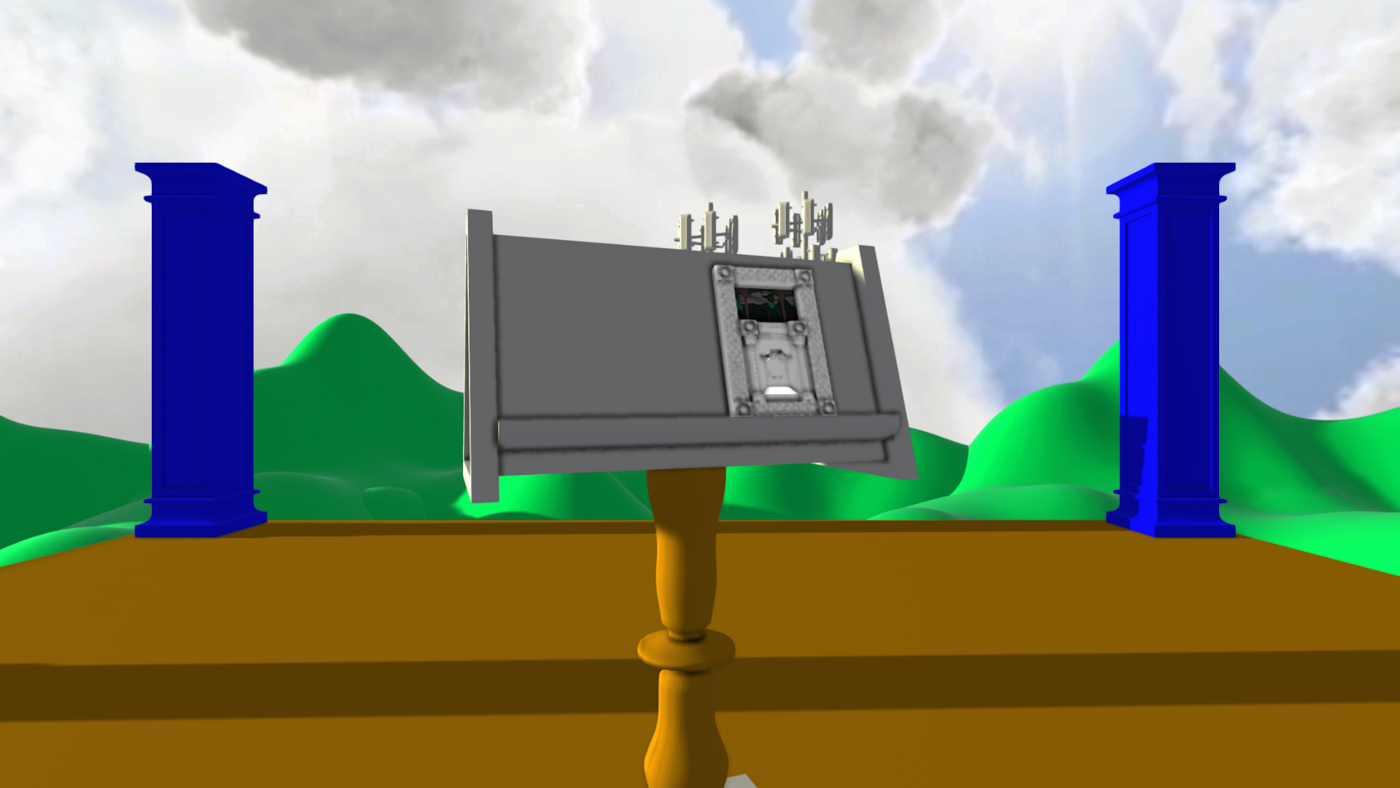
The Clerestory is a sibling piece of The Ambulatory, referencing the upper level of windows in a medieval cathedral. This piece was made with Unity for the Oculus Quest headset and was exhibited at Red Line VR. It is a theatre-within-a-theatre, where the entirety of The Ambulatory is played through a large architectural arch. The person experiencing the virtual reality environment finds themselves on a platform floating in the sky, with a lectern and book simultaneously present in the companion video and virtual space. The experience manifests a purely digital space for contemplation of technology-as-divinity.